Trump's White House Ballroom Keeps Getting More Expensive. Here's What Taxpayers Are Actually On the Hook For.
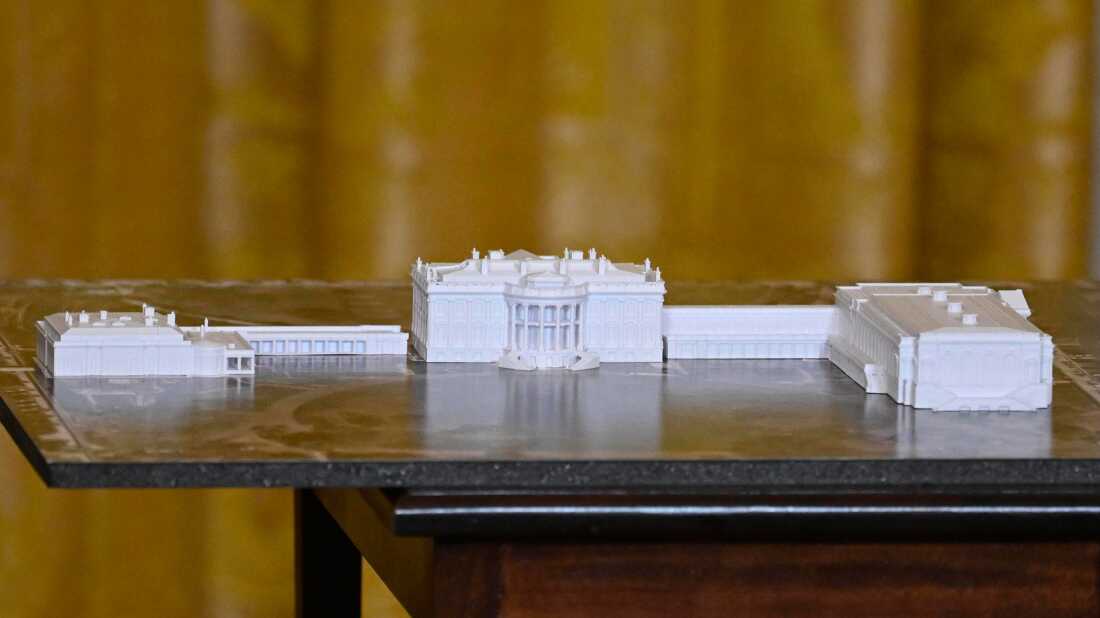
When President Trump announced the White House State Ballroom in July 2025, he made one commitment repeatedly: it would cost taxpayers nothing. The cost of the project has since grown from $200 million to $300 million to $400 million, and the question of what the public will ultimately pay has become considerably harder to answer.
The project involves tearing down the East Wing, a two-story structure added to the White House in 1902 that housed First Lady offices, a visitor entrance for foreign dignitaries, and, beneath it, the Presidential Emergency Operations Center. Demolition began October 20, 2025. In its place, the administration is building a 90,000-square-foot event venue. Trump has said the venue will seat 999 people; official administration figures have cited 650. Either figure is roughly three to five times the capacity of the East Room, which the ballroom is intended to replace for large state dinners and official gatherings. It is the first major structural change to the White House since President Truman's 1948 renovation.
Trump has maintained throughout that the ballroom itself is covered by private donors. Thirty-seven contributors have pledged funding, including Amazon, Apple, Google, Meta, Microsoft, Blackstone CEO Stephen Schwarzman, Commerce Secretary Howard Lutnick's family, and cryptocurrency billionaires Cameron and Tyler Winklevoss. Those donations flow through a National Park Service gift account and are tax-deductible. Trump stated: "I am honored to be the first President to finally get this much-needed project, which is on time and under budget, underway."
The private-funding claim does not cover every cost connected to the project. The White House's fiscal year 2026 budget requests $377 million for presidential residence renovations and repairs, an 866 percent increase from the $39 million spent in fiscal year 2025. An additional $174 million is budgeted for fiscal year 2027. The White House has not broken down how much of that spending is tied directly to the ballroom construction.
A subterranean military complex is also being built beneath the ballroom site, including bomb shelters and medical facilities. That portion is being paid for with public funds. No cost figure has been disclosed.
On top of that, Senate Republicans proposed legislation to direct $1 billion in taxpayer money toward "security adjustments and upgrades" for the East Wing project. The bill's sponsors described the funds as covering security-specific features: missile-resistant steel columns, drone-proof ceilings, and ballistic glass. The Secret Service told Congress that roughly $220 million of the $1 billion would be spent on the ballroom site itself; the rest would fund training facilities and security upgrades elsewhere.
Architectural experts challenged the security-versus-construction distinction. Sara Bronin, an architect and law professor at George Washington University, told PolitiFact: "Security measures must be integrated into the structure and envelope of the building." PolitiFact rated the claim that Republicans sought $1 billion in taxpayer funds for the ballroom as "Mostly True," noting that while the bill restricted spending to security purposes, separating those costs from the broader construction is practically difficult. The Senate parliamentarian ultimately ruled the $1 billion provision could not be included in a budget reconciliation bill, blocking that funding path for now.
The project has proceeded without full congressional authorization. Historic preservation advocates and a federal judge have both said that authorization is required, pointing to precedent set by the Truman renovation, which moved forward with oversight from a bipartisan congressional committee. The National Trust for Historic Preservation filed suit in December 2025, alleging violations of federal preservation and environmental laws. A federal court ordered construction halted, but the administration appealed and work has continued. The National Capital Planning Commission, whose chair is a Trump appointee, approved the project's site plan.
In October 2025, Trump removed all six members of the U.S. Commission of Fine Arts, the advisory body that typically reviews federal construction projects in Washington, before the commission could weigh in on the ballroom.